
In the vast timeline of Earth’s 4.5-billion-year history, insects represent one of evolution’s most remarkable success stories. These small yet mighty creatures emerged hundreds of millions of years ago, pioneering life on land well before dinosaurs or mammals made their debut. From humble beginnings as primitive arthropods navigating a strange new terrestrial environment, insects evolved to become the most diverse and abundant animal group on our planet. Their extraordinary journey from the earliest six-legged pioneers to the millions of species we know today reveals a tale of unparalleled adaptation, resilience, and evolutionary innovation. As we explore the dawn of insect life, we uncover not just the origins of these fascinating creatures, but also gain crucial insights into how they shaped Earth’s ecosystems and paved the way for life as we know it today.
The Primordial Earth: Setting the Stage for Insect Evolution

When insects first evolved, Earth looked nothing like the planet we know today. Approximately 480 million years ago during the Ordovician period, the continents were arranged differently, with most landmass clustered around the equator in the supercontinent Gondwana. The atmosphere contained significantly higher levels of oxygen than modern times, creating conditions that would eventually support the evolution of larger arthropods. Terrestrial environments were largely barren landscapes with primitive plant life just beginning to colonize land, creating the first simple ecosystems. These harsh conditions presented both challenges and opportunities for the early arthropods that would venture from marine environments onto shore, setting the stage for the evolutionary leap that would produce the first insects.
From Sea to Land: The Arthropod Ancestors
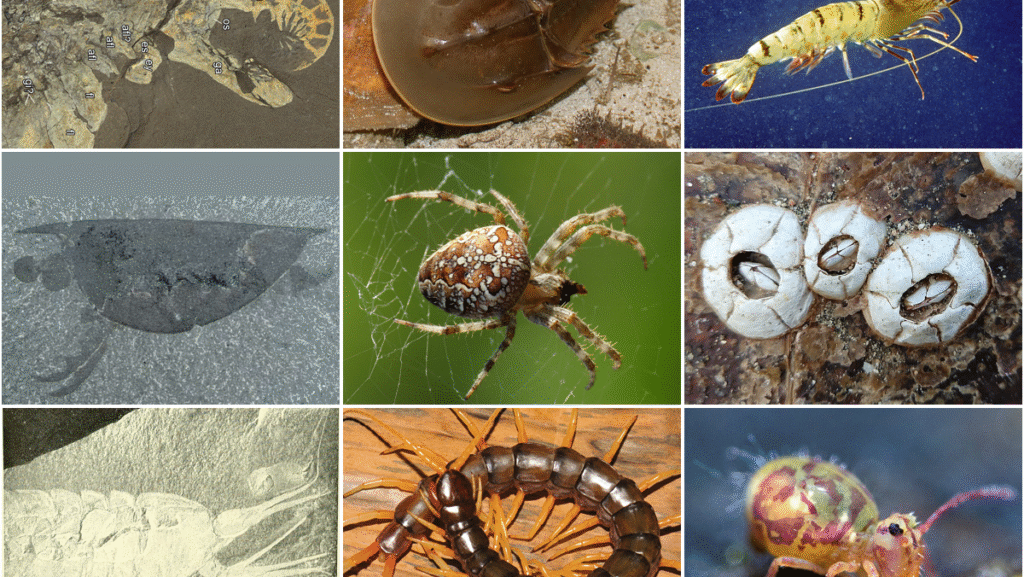

Insects belong to the phylum Arthropoda, a group of invertebrates that includes crustaceans, arachnids, and millipedes. The earliest arthropods were marine creatures, with the fossil record showing they thrived in Earth’s ancient oceans starting over 500 million years ago. Scientists believe that crustacean-like organisms similar to modern silverfish were among the first arthropods to make the transition to land, developing adaptations that allowed them to survive outside the aquatic environment. These pre-insect arthropods likely scavenged among early plant life at the water’s edge before gradually venturing further inland. The transition required profound physiological changes, including new respiratory systems, water conservation mechanisms, and stronger exoskeletons to support their bodies against gravity in the absence of water’s buoyancy.
The Earliest True Insects: Rhyniognatha hirsti
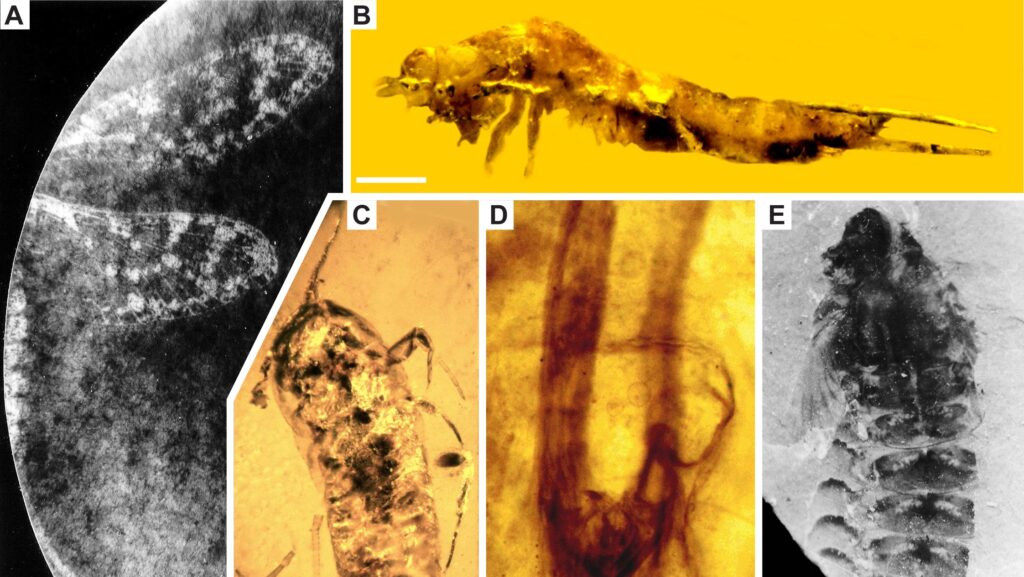

The fossil record of the earliest true insects remains somewhat sparse, but the oldest definitively identified insect fossil belongs to Rhyniognatha hirsti, dated to approximately 400 million years ago during the Early Devonian period. This tiny creature, known only from its mandibles (mouthparts), already displayed characteristics unique to insects, particularly the distinctive jaw structure that separates insects from other arthropods. Rhyniognatha’s specialized mandibles suggest it may have already evolved the ability to feed on plant tissues, an important adaptation that would later allow insects to exploit terrestrial plant resources fully. Perhaps most surprisingly, some features of these mandibles indicate that Rhyniognatha might have already possessed wings or wing precursors, suggesting that flight may have evolved earlier than previously thought, though this remains a subject of scientific debate.
The Evolution of Flight: A Revolutionary Adaptation

The development of flight represents perhaps the most transformative innovation in insect evolution, emerging approximately 350-400 million years ago. This remarkable adaptation gave insects an unprecedented ability to escape predators, disperse to new habitats, find food, and locate mates, ultimately contributing to their extraordinary diversification. The exact evolutionary pathway to insect flight remains debated, with two main theories prevailing: the “from the ground up” hypothesis suggesting wings evolved from body protrusions that helped insects glide from vegetation, and the “from the water up” theory proposing that wings developed from gill-like appendages in aquatic ancestors. Regardless of their origin, insect wings—made of thin membranes supported by a network of veins—required no sacrificed limbs, unlike the wings of vertebrates, allowing insects to maintain all six legs while gaining the ability to fly. This revolutionary adaptation gave early flying insects access to entirely new ecological niches and escape routes from predators, providing a significant evolutionary advantage.
Carboniferous Giants: The Age of Meganeura
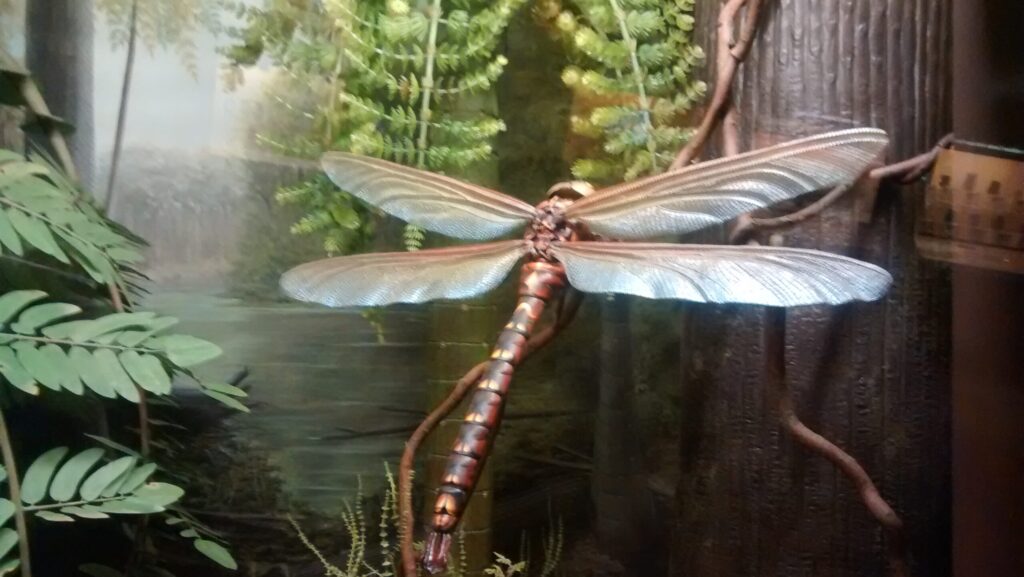

The Carboniferous period (359-299 million years ago) marked a golden age for insect evolution, characterized by oxygen-rich air and expansive forest swamps that created perfect conditions for arthropod gigantism. During this remarkable era, some insects reached sizes that seem almost mythical by today’s standards, with the most spectacular being Meganeura, a griffinfly (related to modern dragonflies) that boasted a wingspan of over two feet. These enormous insects were apex predators in their ecosystems, hunting smaller arthropods and possibly even small amphibians. Their gigantic size was made possible by the Carboniferous atmosphere’s oxygen content, which reached as high as 35% compared to today’s 21%, supporting more efficient respiration through their primitive respiratory systems. The end of this period saw oxygen levels decline and the climate become drier, leading to the extinction of these insect giants and establishing size limitations more similar to what we see in modern insects.
The Development of Complete Metamorphosis
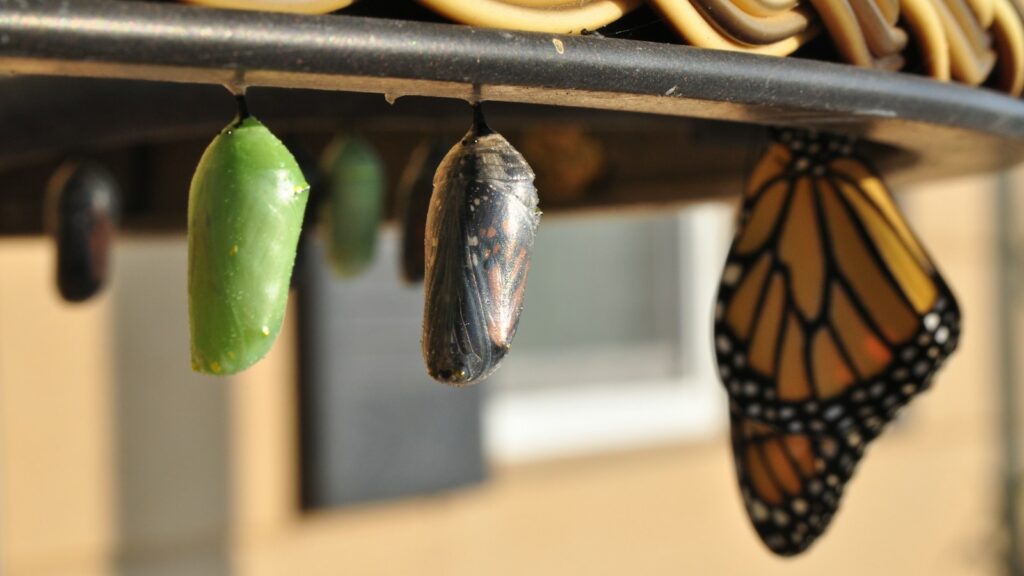
One of the most significant evolutionary innovations in insect history was the development of complete metamorphosis (holometaboly), which first appeared approximately 300 million years ago. This revolutionary life cycle strategy involves four distinct stages: egg, larva, pupa, and adult, allowing insects to essentially live two completely different lives in one lifetime. The immature larval form (like a caterpillar or maggot) can specialize in feeding and growth, often in environments entirely different from adults, while the adult form specializes in reproduction and dispersal. This adaptation reduced competition between juveniles and adults of the same species, allowing them to exploit different ecological niches and resources. Complete metamorphosis proved so successful that insects possessing this trait—including beetles, butterflies, flies, wasps, ants, and bees—now constitute roughly 80% of all insect species, making it one of evolution’s most successful innovations.
Co-evolution with Plants: A Mutual Partnership
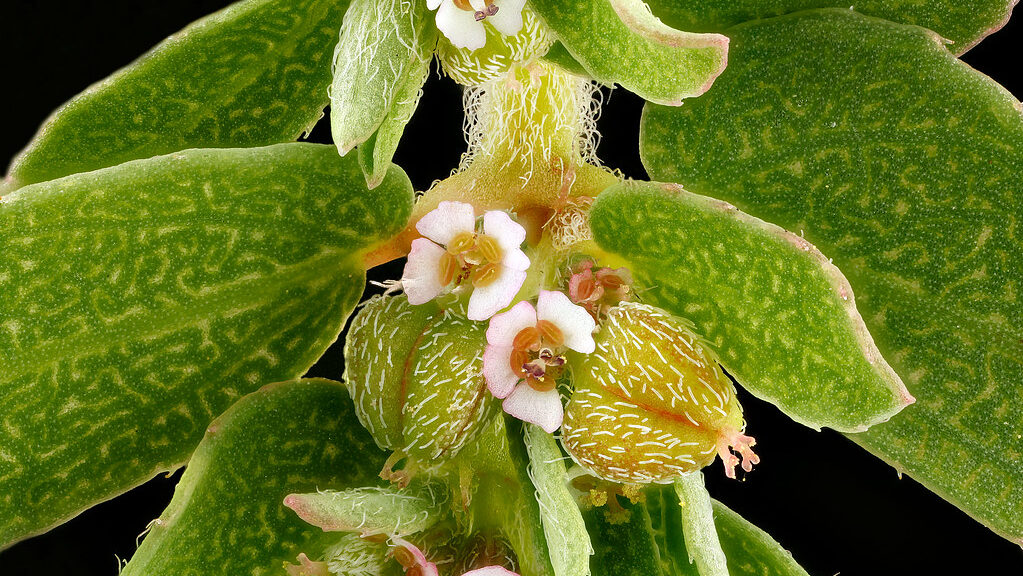
The evolutionary history of insects is inextricably linked with that of plants, forming one of nature’s most important co-evolutionary relationships. Early insects initially fed on decomposing plant material and spores, but as land plants evolved and diversified, so too did insect feeding strategies. By the Carboniferous period, insects had developed specialized mouthparts for chewing, piercing, and sucking plant tissues, creating the first plant-herbivore relationships on land. This evolutionary arms race spurred plants to develop chemical defenses and protective structures, while insects continuously evolved counter-adaptations. The relationship took an even more profound turn with the evolution of flowering plants (angiosperms) around 140 million years ago, leading to specialized pollinator relationships that transformed both plant and insect evolution. Today, roughly 80% of all flowering plants rely on insect pollinators, demonstrating how this ancient partnership has shaped Earth’s terrestrial ecosystems.
Masters of Survival: Adapting Through Mass Extinctions

Throughout Earth’s tumultuous history, insects have demonstrated remarkable resilience, surviving all five major mass extinction events that eliminated countless other species. Their success through these catastrophic periods can be attributed to several key adaptations, including their small size, which requires fewer resources and allows utilization of microhabitats; high reproductive rates that enable rapid population recovery; and tremendous ecological versatility. Perhaps most importantly, insects possess genetic adaptability that allows relatively quick evolutionary responses to changing conditions. The Permian-Triassic extinction event 252 million years ago—which eliminated approximately 96% of marine species and 70% of terrestrial vertebrates—saw insects experience significant losses but ultimately rebound and diversify once again. Even the Cretaceous-Paleogene extinction that famously ended the reign of non-avian dinosaurs 66 million years ago left the insect world largely intact, with many groups continuing to thrive and adapt throughout the subsequent Cenozoic era.
The Evolution of Social Structures

Among the most fascinating chapters in insect evolution is the development of complex social structures, which emerged independently multiple times across different insect orders. True sociality (eusociality), characterized by cooperative brood care, overlapping generations, and division of labor, represents one of the most sophisticated organizational systems in the animal kingdom outside of human society. Termites were the first insects to evolve eusociality approximately 150 million years ago during the Jurassic period, while ants, bees, and some wasps developed similar social structures somewhat later. These insect societies function as superorganisms, with individuals serving specialized roles analogous to cells in a body, sacrificing individual reproduction for the colony’s success. This revolutionary social innovation allowed these insects to become ecologically dominant in many environments, with some ant and termite colonies containing millions of individuals functioning as a coordinated unit, demonstrating the remarkable adaptive potential of insect evolution.
Diversification Explosion: The Road to Millions of Species
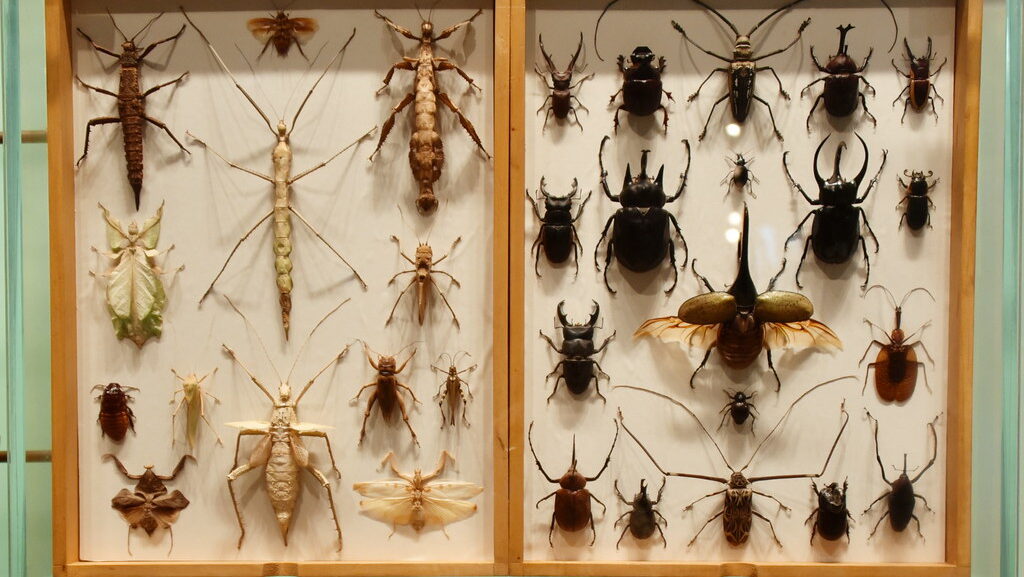
The evolutionary history of insects represents perhaps the greatest diversification of any animal group on Earth, resulting in the estimated 5-10 million species alive today (with only about 1 million formally described by science). This extraordinary radiation began in earnest during the Permian period and accelerated with the rise of flowering plants in the Cretaceous, creating countless new ecological niches for specialized insect exploitation. The diversification rate increased dramatically as insects evolved to fill virtually every conceivable terrestrial and freshwater habitat, developing specialized adaptations for different environments, food sources, and lifestyles. Beetles (order Coleoptera) represent the single most diverse insect order with over 400,000 described species, prompting evolutionary biologist J.B.S. Haldane’s famous quip that God must have “an inordinate fondness for beetles.” This remarkable diversity stems from insects’ evolutionary plasticity, short generation times, and ability to specialize in narrow ecological niches, allowing them to adapt to new opportunities and challenges with unparalleled evolutionary speed.
Insects as Ecosystem Engineers

Beyond their own evolutionary success, insects have profoundly shaped Earth’s ecosystems through their roles as pollinators, decomposers, soil engineers, and food sources for countless other organisms. Early insects were among the first animals to break down dead plant material, accelerating nutrient cycling and soil formation in Earth’s primeval terrestrial ecosystems. As detritivores like springtails, beetles, and termites evolved, they transformed forest ecology by breaking down tough plant tissues and making nutrients available for new growth. The evolution of pollinating insects revolutionized plant reproduction, driving the diversification of flowering plants that now dominate most terrestrial ecosystems. Predatory insects established complex food webs and population controls, while social insects like ants and termites physically restructured habitats through their nest-building activities. This ecological engineering by insects helped create the conditions for the evolution of other terrestrial animals, making them not just survivors but active architects of Earth’s biodiversity.
Modern Insect Diversity: A Living Legacy

The insects we observe today represent the current chapter in an evolutionary saga spanning hundreds of millions of years, with modern orders having recognizable ancestors dating back to the Permian and Triassic periods. Today’s insect diversity encompasses approximately 30 orders, from the primitive wingless bristletails to advanced social hymenopterans like ants and bees. While some groups appear relatively unchanged from their ancient ancestors—like dragonflies whose basic body plan has remained similar for over 300 million years—others continue to evolve and diversify rapidly in response to environmental changes and ecological opportunities. Modern molecular techniques have revolutionized our understanding of insect evolutionary relationships, sometimes overturning classifications based solely on physical characteristics. This living diversity represents an extraordinary evolutionary experiment that has tested countless adaptations across deep time, producing the most successful animal group on Earth in terms of species numbers, ecological roles, and total biomass.
The Future of Insect Evolution in a Changing World

As Earth enters the Anthropocene—an epoch defined by human influence on the planet—insects face unprecedented challenges that will shape their continued evolution. Climate change, habitat destruction, agricultural intensification, and chemical pollution are driving concerning declines in insect abundance and diversity in many regions, potentially disrupting ecological relationships established over millions of years. Yet insects have demonstrated remarkable adaptability throughout their evolutionary history, with some species already showing responses to these pressures through changes in range, phenology, and even rapid genetic adaptation. Urban environments are selecting for heat-tolerant insects with flexible diets, while agricultural pests continuously evolve resistance to pesticides, demonstrating evolution in action. While some insect groups face extinction threats, the evolutionary resilience displayed throughout their long history suggests that insects as a whole will likely persist and adapt to human-altered environments, continuing their remarkable evolutionary journey even as the specific composition of insect communities transforms in response to anthropogenic pressures.
The story of how insects took over the planet is not merely a tale from the distant past, but an ongoing narrative of evolutionary innovation, adaptation, and resilience. From their humble beginnings as early terrestrial arthropods to their current status as the most diverse animal group on Earth, insects have repeatedly demonstrated an exceptional ability to adapt to changing conditions and exploit new opportunities. Their evolutionary journey has not only secured their own success but has fundamentally shaped Earth’s ecosystems, influencing the evolution of plants, vertebrates, and countless other organisms. As we face unprecedented global changes, understanding the evolutionary history of these remarkable creatures offers valuable insights into biological adaptation and reminds us that the small can indeed inherit the Earth. The insects’ planetary dominance—measured not in individual size but in ecological impact, species diversity, and sheer abundance—stands as evolution’s most impressive success story, one that continues to unfold before our eyes.