
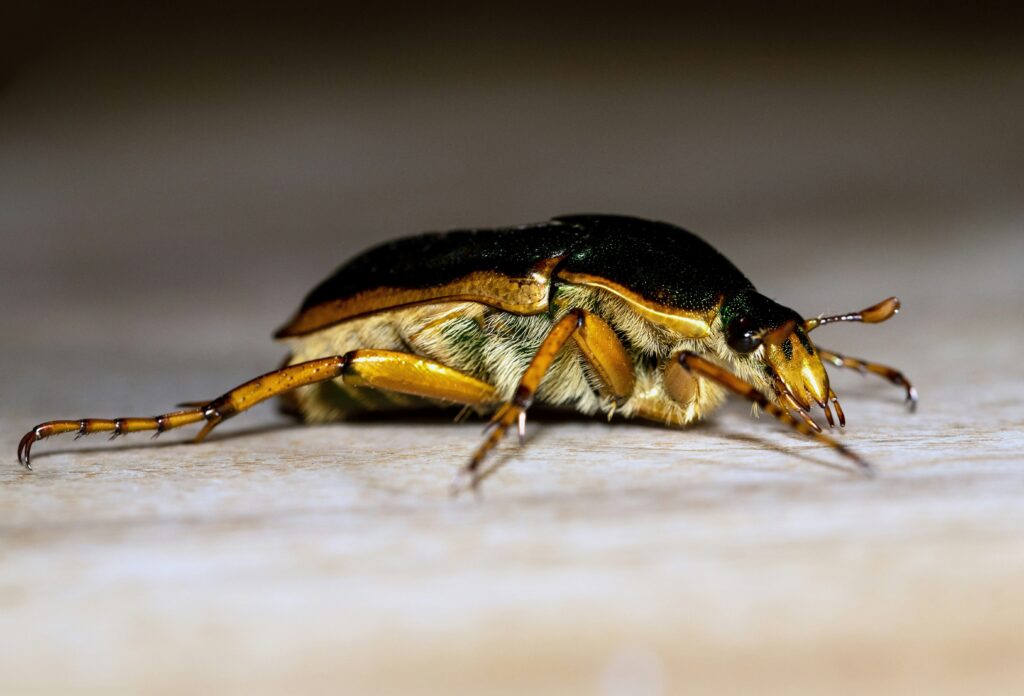
Nature has its own cleanup crew, and they work with an efficiency that would make any professional team jealous. In the quiet corners of forests, beneath fallen logs, and around decomposing matter, tiny workers toil away in shadows. These insects arrive at death scenes with the precision of crime scene investigators, yet they vanish just as mysteriously once their job is complete. Their role in the ecosystem is both fascinating and essential, transforming death into new life while remaining largely invisible to human eyes. What makes these creatures so elusive, and how do they manage to disappear without leaving a trace of their vital work?
The Silent Undertakers of Nature

Carrion beetles are perhaps the most professional of nature’s undertakers. These small, dark insects have evolved specifically to detect and process dead animals, sometimes arriving at a carcass within hours of death. They possess incredible sensory abilities that allow them to smell decomposition from miles away, using specialized antennae that can detect chemical compounds released during the early stages of decay. Once their work is complete, they simply burrow underground or fly away, leaving no evidence of their presence except for the perfectly cleaned remains they leave behind.
Masters of Timing and Precision

Blow flies operate like nature’s first responders, arriving at death scenes with remarkable speed and precision. These metallic-colored insects can detect a fresh carcass from distances that seem impossible, thanks to their highly sensitive chemical receptors. They lay their eggs with surgical precision, ensuring their larvae will have optimal feeding conditions. After their brief but crucial intervention, adult blow flies simply vanish into the environment, leaving behind only their offspring to continue the decomposition process while they move on to the next location.
The Underground Network

Burying beetles work like tiny gravediggers, literally burying small carcasses underground to create perfect nurseries for their young. These remarkable insects can detect dead animals from considerable distances and work in pairs to excavate soil beneath the carcass until it sinks below ground level. They then tend to their buried treasure like devoted parents, feeding their larvae and maintaining the underground chamber. Once their offspring are ready to emerge, the adult beetles simply fly away, leaving no surface evidence of the elaborate underground operation they orchestrated.
Chemical Warfare Specialists

Rove beetles employ chemical strategies that would impress any military strategist. These elongated insects produce powerful antimicrobial compounds that help preserve their food sources and eliminate competition from bacteria and fungi. They move through decomposing matter like tiny chemists, applying their natural preservatives and consuming specific tissues while avoiding others. Their ability to control the chemical environment around dead matter is so effective that they can extend the useful feeding period for weeks, yet they leave no trace of their chemical interventions once they depart.
The Vanishing Act of Flesh Flies

Flesh flies are perhaps the most mysterious of all carrion insects, appearing and disappearing with ghost-like efficiency. Unlike their blow fly cousins, flesh flies give birth to live larvae rather than laying eggs, allowing them to colonize carcasses even faster. These gray and black striped insects have an uncanny ability to assess the quality and stage of decomposition before deciding whether to invest their energy in a particular site. When conditions aren’t perfect, they simply fly away without leaving any evidence of their visit, making them incredibly difficult to study and track.
Micro-Predators That Leave No Footprints

Predatory mites represent some of the smallest members of the carrion community, yet their impact is enormous. These microscopic hunters feed on bacteria, fungi, and smaller insects that colonize dead matter, essentially controlling the entire ecosystem of decomposition. They move through decaying material like invisible shepherds, managing populations of other organisms and preventing any single species from dominating the process. Their tiny size means they can disappear into cracks and crevices that are completely invisible to larger observers, making their comings and goings virtually undetectable.
The Stealth Bombers of Decomposition

Coffin flies earned their ominous name from their ability to find buried remains even deep underground. These small, brown insects can detect decomposition gases that seep through soil and concrete, allowing them to locate buried carcasses that seem completely sealed off from the outside world. They navigate through tiny cracks and spaces that would be impossible for larger insects, reproducing in conditions that would kill most other species. After completing their subterranean missions, they emerge briefly to mate and disperse, then vanish back into the underground world they inhabit.
Seasonal Ghosts of the Insect World

Many carrion insects operate on seasonal schedules that make them appear and disappear like clockwork. Species like certain dermestid beetles emerge only during specific weather conditions or times of year, making their presence seem almost supernatural to casual observers. These insects have evolved internal biological clocks that coordinate their activities with environmental conditions, ensuring they arrive when competition is minimal and resources are optimal. Their seasonal disappearances are so complete that they seem to vanish from existence entirely, only to reappear months later as if materializing from thin air.
The Art of Chemical Camouflage

Some carrion insects have mastered the art of chemical camouflage, producing compounds that mask their presence from predators and competitors. Certain species of carrion beetles can alter their chemical signatures to blend seamlessly with their environment, making them virtually undetectable even to other insects with highly sensitive chemical receptors. This ability to become chemically invisible allows them to work undisturbed and disappear without alerting potential threats to their location or activities. Their chemical stealth technology rivals anything developed by human engineers, yet it evolved naturally over millions of years.
Underground Cities and Hidden Highways

Many carrion insects maintain elaborate underground networks that remain completely hidden from surface observation. These subterranean highways allow them to move between feeding sites without ever appearing above ground, creating transportation systems that span considerable distances. Species like certain ground beetles can travel through root systems, animal burrows, and natural soil channels, emerging only when they detect suitable feeding opportunities. Their underground lifestyle means that entire populations can exist and thrive in areas where humans never suspect their presence.
The Psychology of Avoidance

The most successful carrion insects have evolved sophisticated avoidance behaviors that help them evade detection and competition. They time their activities to avoid peak activity periods of predators and competitors, often working in complete darkness or during weather conditions when other species are inactive. Some species have developed the ability to detect the presence of larger competitors from considerable distances, allowing them to avoid areas where they might be outcompeted or preyed upon. This behavioral sophistication ensures their survival while keeping them invisible to most observers.
Masters of Rapid Reproduction

The speed at which carrion insects can reproduce and disperse is truly remarkable, allowing entire generations to complete their life cycles and disappear before most people notice their presence. Some species can go from egg to adult in just days under optimal conditions, creating population booms that process large amounts of organic matter before vanishing as quickly as they appeared. Their reproductive strategies are perfectly synchronized with the availability of resources, ensuring maximum efficiency while minimizing exposure to dangers. This rapid life cycle strategy makes tracking and studying these insects incredibly challenging for researchers.
The Science of Vanishing

Recent scientific research has revealed that many carrion insects possess abilities that border on the supernatural. Advanced tracking technologies have shown that some species can alter their metabolic rates to become virtually undetectable to thermal imaging equipment. Others produce chemical compounds that interfere with standard detection methods, making them invisible to both natural predators and scientific instruments. These discoveries suggest that the ability to disappear without a trace isn’t just behavioral – it’s a fundamental biological adaptation that has been refined over millions of years of evolution.
Environmental Cleanup Without Evidence

The environmental impact of these vanishing insects is profound, yet they leave virtually no evidence of their essential work. They process tons of organic matter annually, preventing the accumulation of dead material that could harbor dangerous pathogens or create environmental hazards. Their efficiency is so complete that ecosystems appear to clean themselves, with dead animals and organic matter disappearing as if by magic. This invisible environmental service is crucial for maintaining healthy ecosystems, yet it operates entirely outside human awareness and appreciation.
The Future of Invisible Ecology

As climate change and human activities continue to alter natural environments, understanding these invisible ecological workers becomes increasingly important. Their ability to disappear without a trace makes them incredibly difficult to monitor and protect, yet their ecological services are irreplaceable. Scientists are developing new technologies to track and study these elusive insects, hoping to better understand their roles in ecosystem health and stability. The challenge lies in studying creatures that have evolved specifically to avoid detection, requiring innovative approaches that respect their natural behavior while revealing their secrets.
These remarkable insects remind us that nature’s most important work often happens in the shadows, performed by creatures we rarely see but whose services are absolutely essential. Their ability to arrive precisely when needed, complete their vital work, and vanish without leaving evidence represents one of evolution’s most elegant solutions to the challenge of processing death and decay. What other invisible workers might be operating in our world, performing essential services while remaining completely unnoticed by our busy human lives?