
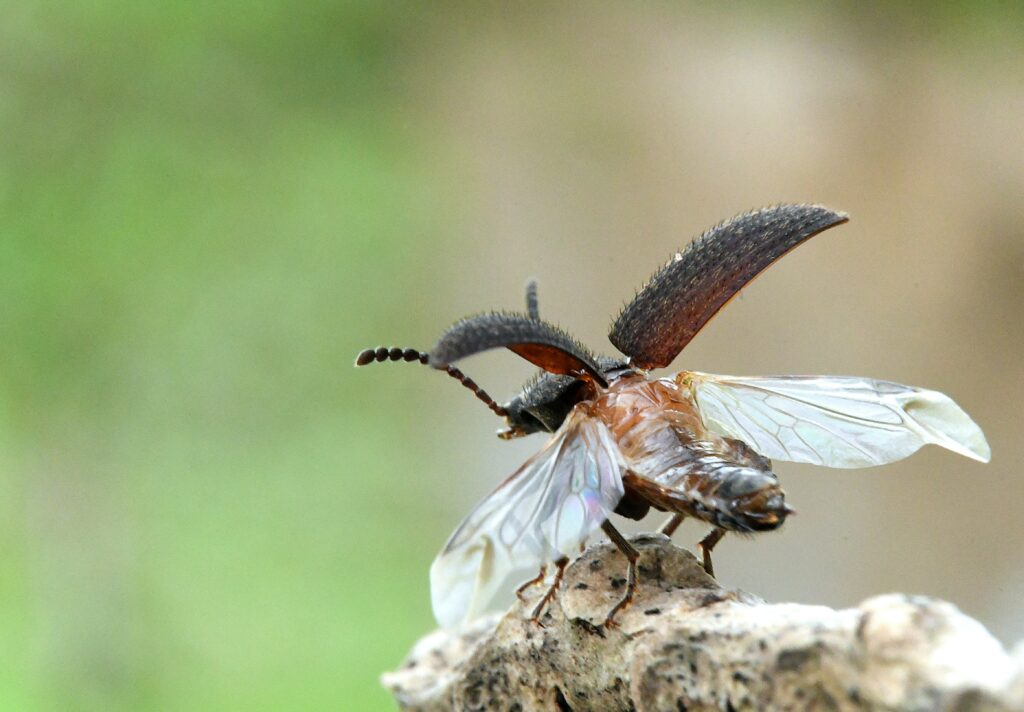
Imagine walking through a forest where every tree stands dead, their bark stripped away by tiny invaders no bigger than your fingernail. Picture farmlands stretching endlessly without a single buzzing bee, or lakes so choked with foreign species that native fish can’t survive. This isn’t science fiction – it’s happening right now across America, and the culprits are smaller than you might think. While we often worry about large predators or climate change, some of our ecosystem’s most devastating enemies arrive on six legs, hidden in shipping containers, tourist luggage, or clinging to imported plants. These microscopic armies are waging a silent war against American biodiversity, and they’re winning.
The Emerald Ash Borer’s Devastating March Across America

The emerald ash borer first appeared in Michigan in 2002, likely hitchhiking in wooden packing materials from Asia. This metallic green beetle, barely half an inch long, has since killed hundreds of millions of ash trees across North America. The larvae burrow beneath the bark, creating S-shaped galleries that cut off the tree’s ability to transport water and nutrients. What makes this invasion particularly heartbreaking is how quickly it spreads – a healthy ash tree can be dead within two to four years of initial infestation. The economic damage alone has exceeded $10 billion, but the ecological cost is immeasurable as entire forest ecosystems collapse without their ash tree foundations.
Asian Giant Hornets: The Murder Hornets That Terrorize Ecosystems

When Asian giant hornets first appeared in Washington State, the media dubbed them “murder hornets” for good reason. These two-inch-long predators can decapitate an entire honeybee colony in just a few hours, literally ripping the heads off defending bees with their massive mandibles. A single hornet can kill 40 honeybees per minute, and a small group can destroy a hive containing 30,000 bees in three hours. Beyond their shocking hunting prowess, these hornets disrupt pollination networks that native plants have depended on for thousands of years. Their venom is potent enough to kill humans, but their real threat lies in their ability to eliminate the pollinators that keep our ecosystems functioning.
The Brown Marmorated Stink Bug Invasion

This shield-shaped insect from Asia has become one of America’s most economically damaging agricultural pests since arriving in the late 1990s. Brown marmorated stink bugs pierce plant tissues with their needle-like mouthparts, injecting enzymes that break down plant cells before sucking out the contents. They feed on over 300 plant species, from soybeans and corn to apples and peppers, causing billions in crop damage annually. What’s particularly insidious is their ability to overwinter in human structures, emerging in spring to reproduce rapidly without natural predators to keep their populations in check. Their feeding damage often makes fruits and vegetables unmarketable, while their massive swarms can overwhelm native insect communities.
Fire Ants: Tiny Warriors Destroying Native Ground Ecosystems

Red imported fire ants arrived in Alabama in the 1930s and have since conquered over 320 million acres across the southern United States. These aggressive insects build underground colonies housing up to 500,000 individuals, creating superorganisms that can quickly dominate local ecosystems. Fire ants are voracious predators that consume everything from seeds and young plants to small vertebrates like ground-nesting birds and reptiles. Their stings inject venom that can kill small animals outright, and they attack in coordinated swarms that overwhelm prey through sheer numbers. Native ant species, which play crucial roles in seed dispersal and soil aeration, simply cannot compete with these organized invaders.
Gypsy Moths: The Defoliators That Strip Forests Bare

Originally brought to Massachusetts in 1868 for silk production, gypsy moths have become one of North America’s most destructive forest pests. During outbreak years, their caterpillars can completely defoliate millions of acres of forest, leaving landscapes looking like winter in the middle of summer. A single gypsy moth caterpillar can consume up to one square foot of leaves during its development, and outbreak populations can reach 1 million caterpillars per acre. While healthy trees can survive one year of complete defoliation, repeated attacks weaken them significantly, making them vulnerable to diseases, other insects, and environmental stresses. The ecological ripple effects are enormous – defoliated forests lose their ability to support wildlife, prevent erosion, and regulate water cycles.
Japanese Beetles: Beautiful Destroyers of Plant Diversity

These metallic copper and green beetles might look attractive, but they’re ecological nightmares that feed on over 400 plant species. Japanese beetles are particularly devastating because both adults and larvae cause damage – adults skeletonize leaves by eating the tissue between veins, while grubs feed on grass roots underground. Their feeding releases pheromones that attract more beetles, creating feeding frenzies that can strip plants bare in days. Native plants evolved without pressure from these insects and have no natural defenses against their feeding patterns. The beetles’ broad diet means they can devastate everything from roses and grapes to corn and soybeans, disrupting food webs and reducing plant diversity across entire regions.
Spotted Lanternfly: The Jumping Threat to Agriculture and Forests

This colorful planthopper from Asia first appeared in Pennsylvania in 2014 and has since spread to multiple states, threatening both agricultural crops and forest ecosystems. Spotted lanternflies use their piercing mouthparts to tap into plant stems and extract sugary sap, weakening plants and making them vulnerable to diseases and other stresses. They excrete massive amounts of sticky honeydew that coats everything below their feeding sites, creating perfect conditions for sooty mold growth that further damages plants. Their preferred host, the tree of heaven (itself an invasive species), allows them to build enormous populations that can then spill over onto native plants and crops. The economic threat is staggering – Pennsylvania alone faces potential losses of $324 million annually if the infestation continues to spread.
Hemlock Woolly Adelgid: The Tiny Killer of Ancient Forests

These aphid-like insects, barely visible to the naked eye, are systematically destroying some of America’s most ancient and ecologically important forests. Hemlock woolly adelgids attach themselves to hemlock twigs and feed on stored starches, gradually weakening trees until they die within four to ten years. Eastern hemlocks can live for over 800 years and create unique cool, moist microclimates that support specialized communities of plants and animals found nowhere else. When these foundation species disappear, entire ecosystems collapse – streams warm up, soil erodes, and countless species that depend on hemlock forests lose their homes. The adelgids spread both through wind dispersal and human transport, making containment extremely difficult once they establish in an area.
Sudden Oak Death and Its Insect Vectors

While Sudden Oak Death is caused by a water mold pathogen, bark beetles and other insects play crucial roles in spreading this devastating forest disease. These insects bore into infected trees and carry spores on their bodies to healthy trees, dramatically accelerating disease transmission across landscapes. The pathogen kills tanoak, coast live oak, and California black oak, along with dozens of other native plant species that form the backbone of California’s coastal ecosystems. Over one million oak trees have already died, and the disease continues spreading through both natural insect movement and human activities. The loss of these keystone species creates cascading effects throughout food webs, as countless animals from birds to mammals depend on oak forests for food and shelter.
How Global Trade Accelerates Insect Invasions

Every day, thousands of shipping containers, cargo planes, and vehicles cross international borders, inadvertently carrying hitchhiking insects that could become tomorrow’s ecological disasters. Modern global trade moves goods faster than ever before, often outpacing our ability to detect and intercept invasive species before they establish populations. Insects hide in wooden packaging materials, nursery plants, fresh produce, and even tourist luggage, emerging in new environments where they have no natural enemies. The volume of international trade has increased exponentially over the past decades, creating more opportunities for accidental introductions than ever before in human history. Once established, these invasive insects can spread through natural means or continued human transport, making early detection and rapid response our best defense against new invasions.
The Economic Cost of Invasive Insect Damage

Invasive insects cost the United States over $70 billion annually in agricultural losses, forest damage, and control efforts. This staggering figure includes direct crop damage, reduced property values from dead trees, expensive pesticide treatments, and the costs of monitoring and management programs. The emerald ash borer alone has cost municipalities hundreds of millions of dollars for tree removal and replacement in urban areas. Agricultural producers face impossible choices between expensive treatments and accepting crop losses, while forest landowners watch decades of growth destroyed in just a few years. These economic impacts ripple through entire communities, affecting everyone from farmers and landscapers to tourism operators and outdoor recreation businesses.
Climate Change: The Invasion Accelerator

Rising temperatures and changing precipitation patterns are making invasive insect problems worse by expanding the geographic ranges where these species can survive and reproduce. Many invasive insects are adapted to warmer climates and benefit from longer growing seasons and milder winters that allow more generations per year. Climate change also stresses native ecosystems, making them more vulnerable to invasion and less resilient against insect damage. Warmer temperatures can accelerate insect development and reproduction while simultaneously weakening plant defenses against herbivory. The combination of climate change and invasive insects creates a double threat that native ecosystems struggle to withstand, often leading to rapid ecological transformations that can persist for decades.
Native Species Under Siege: The Ripple Effects

When invasive insects establish in new environments, they don’t just damage plants directly – they trigger cascading effects that devastate entire food webs. Native birds that depend on specific insects for food find their prey replaced by invasive species they can’t or won’t eat, leading to population declines and local extinctions. Small mammals lose food sources and nesting sites when invasive insects kill the trees and plants they depend on. Pollinators face increased competition for resources and may be directly attacked by aggressive invasive species like Asian giant hornets. The loss of native plant diversity reduces the complexity of ecosystems, creating simplified environments that are less stable and more vulnerable to future invasions and environmental changes.
Success Stories: When We Fight Back and Win

Despite the overwhelming challenges, there are inspiring examples of successful invasive insect management that show hope for the future. Classical biological control programs have introduced natural enemies of invasive insects, like parasitic wasps that specifically target gypsy moth caterpillars or beetles that control invasive weeds. Early detection and rapid response programs have successfully eradicated small populations of Asian giant hornets before they could establish breeding colonies. Coordinated management efforts combining multiple strategies have slowed the spread of emerald ash borer and bought time for research into resistant tree varieties. These successes demonstrate that with sufficient resources, scientific knowledge, and public cooperation, we can sometimes win battles against invasive insects – though the war continues on multiple fronts.
What You Can Do to Help Protect Biodiversity

Every person can play a role in preventing new invasive insect introductions and managing existing populations through simple but important actions. When traveling, avoid bringing plant materials, wooden souvenirs, or fresh foods across state or international borders without proper inspection. Report unusual insects or plant damage to local extension offices or state departments of agriculture, as early detection is crucial for successful management. Support native plant landscaping and avoid purchasing plants that could harbor invasive insects or become invasive themselves. Participate in citizen science projects that monitor invasive species populations and help researchers track their spread and impacts.
The battle against invasive insects represents one of the most complex conservation challenges of our time, requiring unprecedented cooperation between scientists, policymakers, and citizens. These tiny invaders continue reshaping American landscapes in ways we’re only beginning to understand, destroying ecosystems that took thousands of years to develop in just a few decades. Yet within this crisis lies an opportunity to reimagine how we protect biodiversity, manage international trade, and respond to global environmental challenges. The insects keep coming, but so does our determination to defend the natural heritage that makes America’s ecosystems unique. Will we learn to stay ahead of these six-legged invaders before it’s too late?