
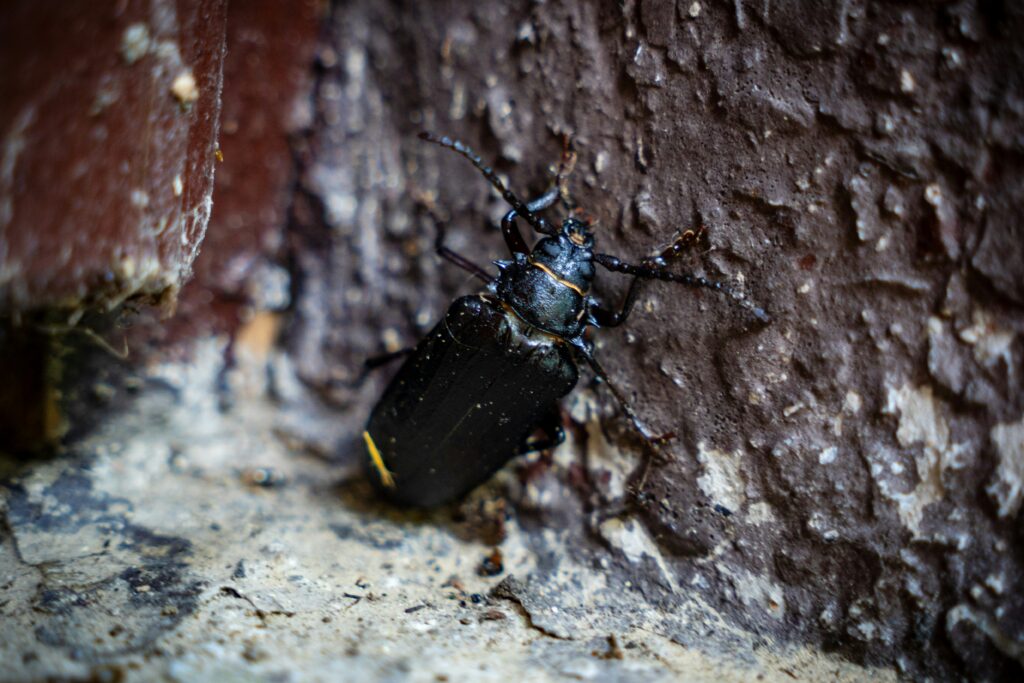
Right now, as you read this, millions of tiny invaders are quietly munching their way through America’s forests. These aren’t the charismatic megafauna that capture headlines or the large predators that stalk nature documentaries. Instead, they’re small, often overlooked insects with an appetite for destruction that would make a hurricane jealous. Wood-boring beetles, moths, and wasps have crossed oceans and borders to feast on trees that have no natural defenses against them, turning majestic forests into graveyards of hollow timber.
The Silent Army Beneath the Bark

Wood borers operate like nature’s most efficient demolition crew, working from the inside out to systematically destroy their hosts. These insects spend most of their lives as larvae, tunneling through the inner layers of trees where they feed on nutrient-rich wood tissue. The damage often goes unnoticed for months or even years until the tree begins showing external signs of distress. By then, entire galleries of tunnels have weakened the tree’s structure, making it vulnerable to wind damage and secondary infections. What makes invasive species particularly devastating is that native trees lack the chemical defenses and resistance mechanisms that co-evolved with wood borers in their original habitats.
Emerald Ash Borer: The Green Death

Perhaps no invasive wood borer has captured public attention quite like the emerald ash borer, a metallic green beetle that arrived from Asia in the early 2000s. This half-inch insect has killed hundreds of millions of ash trees across North America, earning it the grim distinction of being the most destructive forest pest in the continent’s history. The larvae create serpentine galleries under the bark that disrupt the tree’s ability to transport water and nutrients, essentially starving the tree from within. What started as isolated infestations in Michigan has now spread to over 35 states and several Canadian provinces. The economic impact alone exceeds billions of dollars when you factor in tree removal, replacement costs, and lost ecosystem services.
Asian Longhorned Beetle: The Tree Terminator

If the emerald ash borer is a sniper, the Asian longhorned beetle is a bulldozer. This glossy black beetle with distinctive white spots can attack a wide range of hardwood trees, including maples, willows, and poplars. Adult females chew circular pits in bark to lay their eggs, and the developing larvae bore deep into the tree’s heartwood, creating tunnels up to 20 inches long. The exit holes they create are perfectly round and about the size of a dime, giving infested trees a distinctive polka-dot appearance. Unlike specialists that target specific tree species, this generalist approach makes the Asian longhorned beetle particularly dangerous to diverse forest ecosystems. A single beetle can live for up to three years, and females can lay dozens of eggs during their lifetime.
The Hitchhikers’ Guide to Forest Destruction

Most invasive wood borers didn’t book passage to America deliberately – they arrived as stowaways in wooden shipping materials, furniture, and live plants. International trade routes have become highways for these tiny invaders, with cargo ships and planes serving as unwitting transportation networks. Wooden pallets, crates, and packaging materials often harbor beetle larvae that can survive long journeys in a dormant state. Once they arrive in suitable climates, these insects emerge to find forests full of naive host trees with no evolutionary experience dealing with their particular feeding strategies. The globalization of trade has accelerated both the frequency and geographic spread of these biological invasions.
Southern Pine Beetle: The Native Turned Rogue

Not all destructive wood borers are foreign invaders – sometimes native species become problematic when environmental conditions shift in their favor. The southern pine beetle has always existed in southeastern forests, but climate change and forest management practices have allowed populations to explode and expand northward. These tiny beetles attack stressed or weakened pine trees, often working in coordinated mass attacks that can overwhelm even healthy trees. They carry fungal spores that help them break down tree defenses while providing food for developing larvae. Drought conditions and warming temperatures have created perfect storm conditions for southern pine beetle outbreaks, with single infestations capable of killing thousands of acres of forest.
Coffee Berry Borer: The Crop Killer

While most attention focuses on forest trees, invasive wood borers also threaten agricultural crops with devastating efficiency. The coffee berry borer, originally from Africa, has become a nightmare for coffee growers in Hawaii and is spreading to other coffee-producing regions. This tiny beetle bores directly into coffee berries, where females lay eggs and larvae develop by consuming the coffee seeds. A single infested berry can produce dozens of new beetles, and the rapid reproduction cycle means populations can explode quickly under favorable conditions. The economic impact extends beyond crop losses to include reduced coffee quality and increased pest management costs. For small-scale farmers who depend on coffee as their primary income source, even minor infestations can be financially catastrophic.
Warning Signs of Wood Borer Infestations

Detecting wood borer infestations early can mean the difference between saving a tree and losing it entirely. Look for small, round exit holes in bark that appear as if someone shot the tree with a tiny bullet. Many species produce distinctive sawdust-like frass that accumulates at the base of infested trees or in bark crevices. Woodpecker activity often increases around infested trees as these birds hunt for protein-rich larvae beneath the bark. Crown dieback, yellowing leaves, and premature leaf drop can all signal that wood borers are disrupting the tree’s vascular system. Some beetles produce pheromones that attract mates, creating a sweet or fruity smell around heavily infested trees.
The Ecosystem Domino Effect

When invasive wood borers kill trees, the ecological consequences ripple through entire forest communities in ways that scientists are still discovering. Cavity-nesting birds lose their homes when dead trees fall, while forest-floor plants struggle to adapt to sudden changes in light availability. Stream temperatures can rise dramatically when streamside trees die, affecting fish populations and aquatic insects. The carbon storage capacity of forests plummets as living trees become sources of atmospheric carbon dioxide instead of sinks. Even seemingly minor changes in forest composition can alter wildlife migration patterns, pollinator networks, and seed dispersal systems that took centuries to develop.
Chemical Warfare in the Forest

Trees aren’t defenseless victims in this biological arms race – they’ve evolved sophisticated chemical defense systems to repel wood-boring insects. Many conifers produce resin that can drown attacking beetles or expel them from the tree entirely. Hardwood trees often produce tannins and other toxic compounds that make their wood less palatable to boring insects. However, invasive species often arrive from regions where trees have different chemical defenses, leaving American trees vulnerable to attack strategies they’ve never encountered. Some wood borers have even evolved to turn tree defenses against them, using tree chemicals as cues to locate suitable hosts or as nutrients for their own development.
Biological Control: Fighting Fire with Fire

Scientists have recruited natural enemies of invasive wood borers in an effort to restore ecological balance to affected forests. Parasitic wasps that specialize in hunting specific wood borer species have been imported and released in carefully controlled programs. These biocontrol agents often have incredibly specialized hunting strategies, such as using their antennae to detect beetle larvae through several inches of solid wood. Fungal pathogens that cause diseases in wood borer populations are another promising avenue for biological control. However, introducing any new species requires extensive testing to ensure they won’t become invasive problems themselves. The approval process for biological control agents can take over a decade of rigorous safety testing.
Technology’s Role in the Bug Hunt

Modern technology has revolutionized how scientists detect and monitor invasive wood borer populations. Acoustic sensors can pick up the subtle sounds of larvae chewing through wood, allowing researchers to identify infestations before external symptoms appear. Pheromone traps mimic the chemical signals that beetles use to find mates, creating irresistible lures that help scientists track population levels and spread patterns. Satellite imagery and drone surveys can identify stressed trees across vast forest landscapes, highlighting potential infestation hotspots for ground crews to investigate. DNA barcoding techniques allow rapid species identification from tiny larval fragments, helping customs officials intercept new invasive species before they establish populations.
The Economics of Invasion

The financial toll of invasive wood borers extends far beyond the immediate cost of tree removal and replacement. Property values can plummet in neighborhoods where signature tree species have been eliminated by invasive pests. Tourism revenue suffers when scenic forests become landscapes of dead and dying trees. The lumber industry faces supply disruptions and quality issues when wood borer damage makes trees unsuitable for commercial use. Municipal budgets strain under the cost of removing hazardous dead trees from parks, streets, and public spaces. Insurance companies have begun factoring invasive species risk into their coverage decisions, recognizing that a single outbreak can cause millions of dollars in property damage.
Climate Change: Adding Fuel to the Fire

Rising temperatures and changing precipitation patterns are creating more favorable conditions for many invasive wood borer species while simultaneously stressing the trees they attack. Warmer winters allow more beetles to survive the cold season, leading to larger populations in spring. Extended drought periods weaken tree defenses, making them more susceptible to successful attacks. Some wood borer species are completing additional generations per year as growing seasons lengthen, accelerating population growth and damage rates. Climate change is also enabling the geographic expansion of many species into regions that were previously too cold for their survival. These converging factors suggest that wood borer problems are likely to intensify rather than diminish in coming decades.
International Cooperation and Quarantine Efforts

Preventing new invasive wood borer introductions requires unprecedented international cooperation between governments, industries, and scientific institutions. Heat treatment standards for wooden shipping materials have been harmonized across many countries to kill wood-boring insects before they can travel. Quarantine facilities at major ports use trained detection dogs, X-ray machines, and expert inspectors to intercept prohibited materials. International databases track known invasive species distributions and high-risk pathways to help predict where new introductions might occur. However, the sheer volume of global trade makes it impossible to inspect every shipment, and wood borers are masters at hiding in small cracks and crevices where they’re easily overlooked.
Community Action and Citizen Science

Local communities have become crucial partners in the fight against invasive wood borers, serving as early warning systems and participating in management efforts. Citizen science programs train volunteers to identify suspicious insect damage and report findings to researchers. Community groups organize tree planting events to replace species killed by invasive pests, often choosing native varieties that support local wildlife. Educational programs in schools and nature centers help build awareness about invasive species issues among the next generation of forest stewards. Some communities have developed innovative approaches like “adopt-a-tree” programs that encourage residents to monitor specific trees for signs of invasion. The collective eyes and ears of engaged citizens often detect new infestations faster than professional monitoring programs alone could achieve.
The battle against invasive wood borers represents one of the most complex conservation challenges facing modern forest ecosystems. These tiny insects wield disproportionate power to reshape entire landscapes, killing millions of trees and fundamentally altering the character of American forests. Success in managing these invasions requires combining cutting-edge science with old-fashioned vigilance, international cooperation with local action, and technological innovation with biological understanding. While we may never completely eliminate the threat of invasive wood borers, early detection, rapid response, and sustained management efforts can help minimize their impact on the forests we depend on for clean air, clean water, and natural beauty. The next time you walk through a forest, remember that beneath every bark surface, an ancient war between trees and beetles continues to play out – and the outcome will shape the landscapes our children inherit. What role will you play in protecting these irreplaceable ecosystems?